
1. Purpose
This publication establishes the foundational principles through which responsibility may be made provable.
Responsibility Infrastructure exists to ensure that responsibility can be identified, attributed, evidenced, verified, transferred, and reconstructed when required.
2. Scope
These principles apply to all Responsibility Infrastructure environments regardless of sector, technology stack, organisational model, or governance framework.
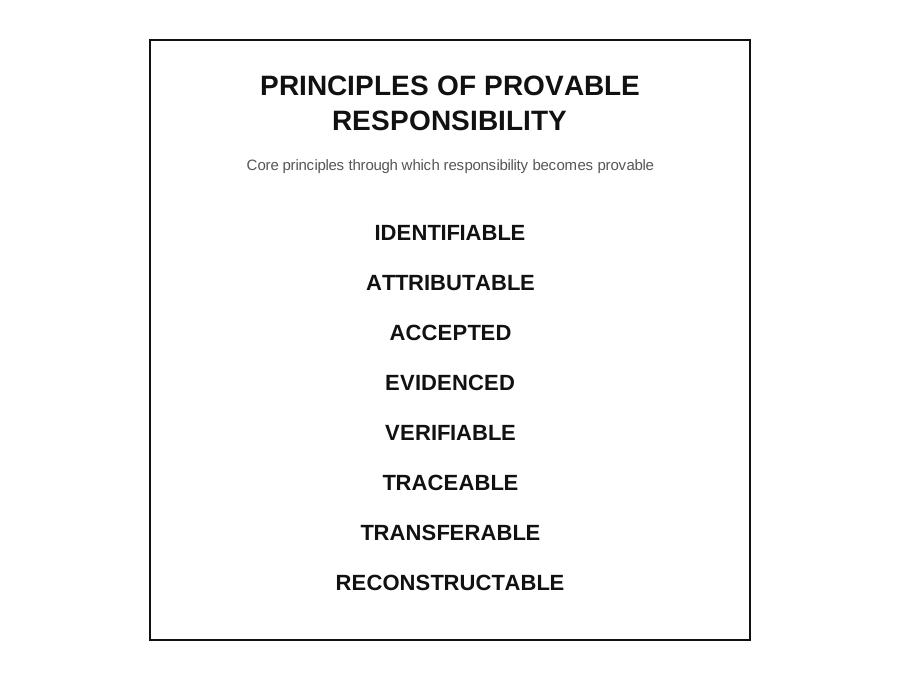
The principles of provable responsibility form a cumulative sequence. Each principle strengthens the ability to rely upon responsibility claims and supports the principles that follow.
3. Principle 1 — Responsibility Must Be Identifiable
Responsibility cannot be managed if it cannot first be identified.
4. Principle 2 — Responsibility Must Be Attributable
Responsibility must be attributable to a defined actor, role, function, or authority.
5. Principle 3 — Responsibility Must Be Accepted
Responsibility must be accepted before reliance can reasonably occur.
6. Principle 4 — Responsibility Must Be Evidenced
Responsibility-related activity must generate supporting evidence.
7. Principle 5 — Responsibility Must Be Verifiable
Evidence must be capable of independent verification.
8. Principle 6 — Responsibility Must Be Traceable
Responsibility must remain traceable throughout its operational lifecycle.
9. Principle 7 — Responsibility Must Be Transferable
Responsibility transfers must be explicit, bounded, and observable.
10. Principle 8 — Responsibility Must Be Reconstructable
Responsibility history must be capable of reconstruction after the fact.
11. Principle 9 — Responsibility Requires Boundaries
Responsibility begins, ends, transfers, escalates, and resolves within defined boundaries.
12. Principle 10 — Responsibility Requires Preservation
Responsibility records must remain preserved for future verification and reconstruction.
13. Relationship Between the Principles
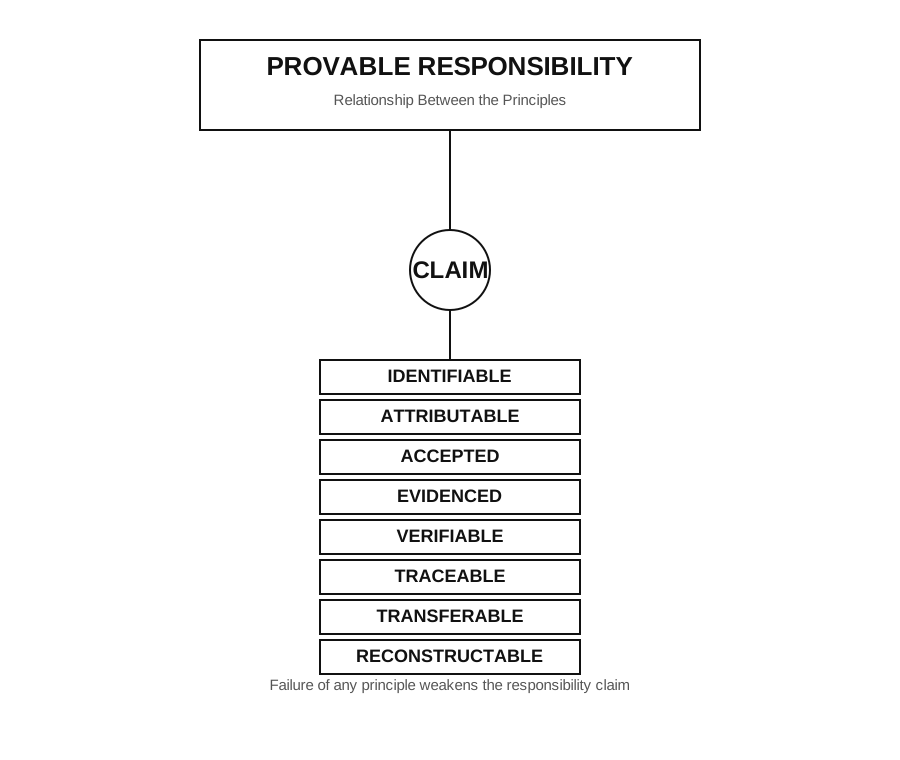
The principles of provable responsibility are cumulative rather than optional.
Responsibility may only be considered provable where all principles operate together. Failure of any principle may weaken or invalidate the ability to rely upon a responsibility claim.
For example, responsibility may be identifiable but not attributable, attributable but not accepted, accepted but not evidenced, or evidenced but not verifiable. In each case the ability to rely upon the responsibility record becomes impaired.
The principles therefore operate as an integrated framework through which responsibility may become observable, reliable, and reconstructable.
14. Keywords
Provable Responsibility, Responsibility, Identification, Attribution, Acceptance, Evidence, Verification, Traceability, Transfer, Reconstruction, Responsibility Infrastructure