
1. Purpose
RI-003 defines the architectural components required for Responsibility Infrastructure. This publication defines the universal structure of a Responsibility Record.
A Responsibility Record is the preserved and unified record of a responsibility lifecycle. It provides a complete and portable representation of responsibility that can be examined, transferred, verified, reconstructed, and relied upon independently of any specific technology, software platform, storage medium, or organisational environment.
This publication establishes the minimum structural requirements necessary for a record to be recognised as a valid Responsibility Record within the Responsibility Infrastructure framework.
2. Definition of a Responsibility Record
A Responsibility Record is a cohesive record of custody documenting the existence, condition, evidence, verification, transfer, and outcome of a responsibility lifecycle.
A Responsibility Record is not merely a collection of events, messages, tasks, approvals, or logs. It is a structured record that preserves responsibility in a form capable of independent examination and reconstruction.
Responsibility Records may exist in physical, digital, procedural, legal, administrative, or technical environments. The validity of a Responsibility Record is determined by its structural completeness rather than its implementation medium.
3. Mandatory Record Sections
Every Responsibility Record shall contain four mandatory sections. Together these sections establish the minimum information required to preserve a complete responsibility lifecycle.
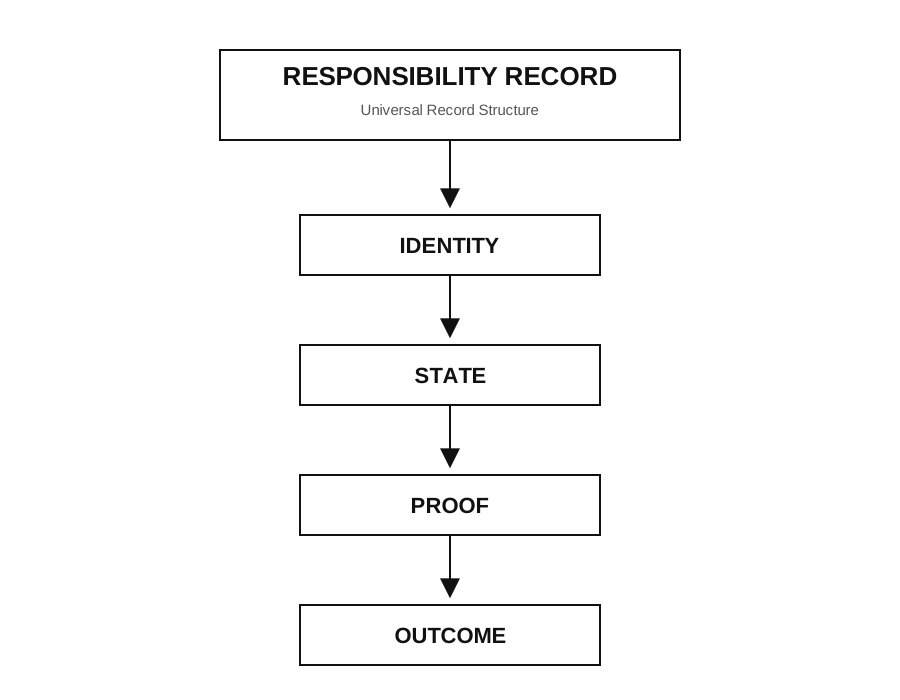
3.1 Identity Section
The Identity Section establishes the existence and context of the responsibility.
- Who holds or held responsibility.
- What responsibility existed.
- Where the responsibility applied.
- When the responsibility was created, assigned, accepted, or recorded.
Without identity information, responsibility cannot be reliably attributed.
3.2 State Section
The State Section records the condition of responsibility throughout its lifecycle.
- Assigned
- Accepted
- Active
- Escalated
- Transferred
- Verified
- Completed
- Discharged
- Closed
The State Section preserves the chronological progression of responsibility through time.
3.3 Proof Section
The Proof Section contains the information supporting responsibility-related claims.
- Evidence
- Observations
- Records
- Artefacts
- Supporting documentation
- Verification outcomes
The Proof Section enables responsibility assertions to be examined independently of the responsible party.
3.4 Outcome Section
The Outcome Section records the recognised result of the responsibility lifecycle.
- Transfer
- Completion
- Discharge
- Closure
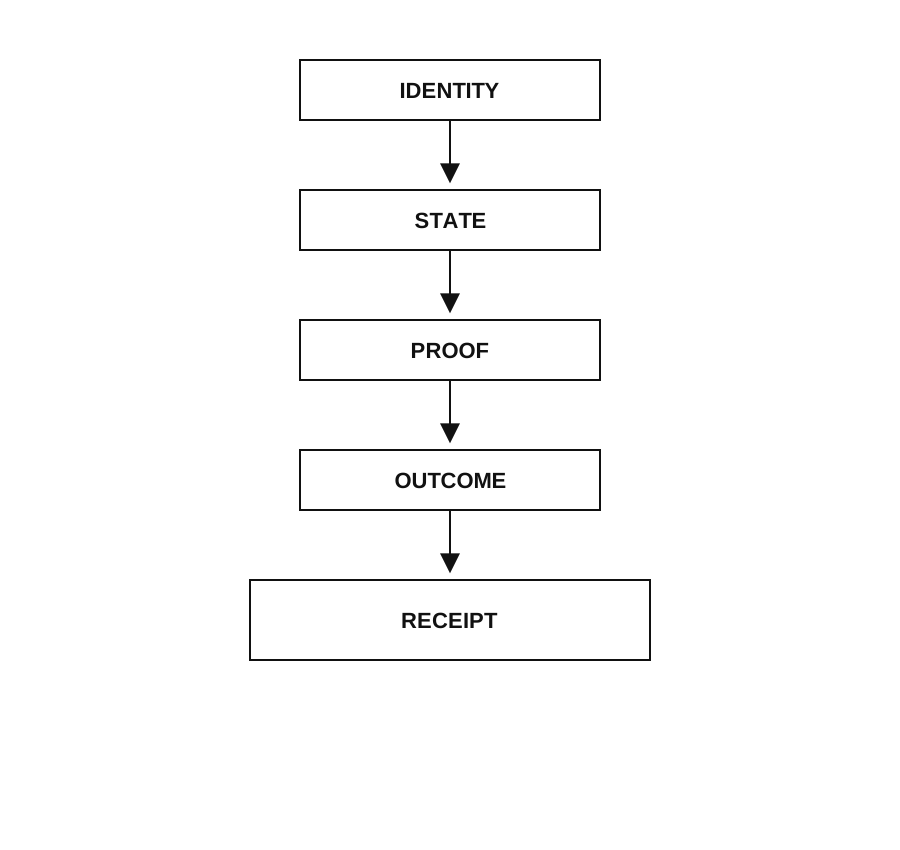
- Receipt issuance
The Outcome Section establishes the final recognised status of the responsibility.
4. Record Integrity
The four mandatory sections are interdependent. A Responsibility Record is considered complete only when Identity, State, Proof, and Outcome remain structurally connected and capable of reconstruction.
The removal, corruption, or absence of any mandatory section may impair the ability to establish, verify, transfer, or reconstruct responsibility.
A Responsibility Record therefore functions as an integrated record rather than a collection of independent documents.
5. Record Completeness
A record is considered structurally complete only when all mandatory sections are present and capable of independent examination.
Records that contain activity information but lack identity, proof, state history, or outcome information do not constitute valid Responsibility Records under this specification.
6. Conformance Considerations
Responsibility Records may be implemented using diverse operational approaches including physical files, administrative records, managed registries, databases, application systems, distributed ledgers, or other information environments.
Conformance is determined by the preservation and integrity of the four mandatory sections rather than the technology used to store or process them.
7. Keywords
Responsibility Infrastructure, Responsibility Record, Identity, State, Proof, Outcome, Record Integrity, Record Completeness, Conformance