
This publication defines the structural and procedural framework for the operation of institutional registries within the Responsibility Infrastructure category. A registry does not generate governance authority over the category itself; it provides an objective platform for recording recognised outputs.
1. Purpose
This publication defines the structural and procedural framework for registries operating within the Responsibility Infrastructure category.
A Responsibility Infrastructure Registry provides the authoritative public record of recognised standing.
Its purpose is to ensure that Recognition Decisions, Registry Entries, status changes, limitations, suspensions, revocations, supersessions, and related receipts remain identifiable, attributable, retrievable, and reconstructable.
2. Scope
This framework applies to registries that publish authoritative standing arising from an authorised Recognition process.
It applies across organisational, professional, technical, sectoral, national, international, human, and artificial intelligence environments.
This framework governs Registry publication and standing. It does not replace the evidence, verification, Recognition, accreditation, licensing, certification, regulatory, judicial, or accountability processes that may precede or rely upon a Registry Entry.
3. Normative Language
The terms shall, should, and may are used as follows:
- shall identifies a mandatory requirement;
- should identifies a recommended practice; and
- may identifies a permitted option.
4. Definition of a Responsibility Infrastructure Registry
A Responsibility Infrastructure Registry is an authoritative publication environment through which recognised standing and its current status may be recorded, retrieved, and independently relied upon.
A Registry Entry records the standing produced by an authorised Recognition Decision.
A Registry shall not be treated as:
- the original source of responsibility;
- the creator of the underlying evidence;
- the verifier of the original claim;
- the Recognition decision-maker;
- a substitute for the underlying Responsibility Record;
- an accountability tribunal;
- a disciplinary authority;
- a court or regulator; or
- a commercial directory without authoritative standing.
5. Core Registry Function
The Registry performs four primary functions:
- publish recognised standing;
- preserve the authoritative Registry Entry;
- record changes to standing through time; and
- provide a reliable means of retrieving the current and historical record.
The Registry functions as the authoritative source of published standing.
It shall not silently re-perform verification, reopen the merits of a Recognition Decision, or substitute its own judgment for the authorised Recognition authority.
6. Constitutional Separation
The following functions shall remain distinguishable:
- responsibility execution;
- evidence creation and submission;
- verification;
- Recognition;
- Registry publication;
- receipt issuance; and
- accountability judgment.
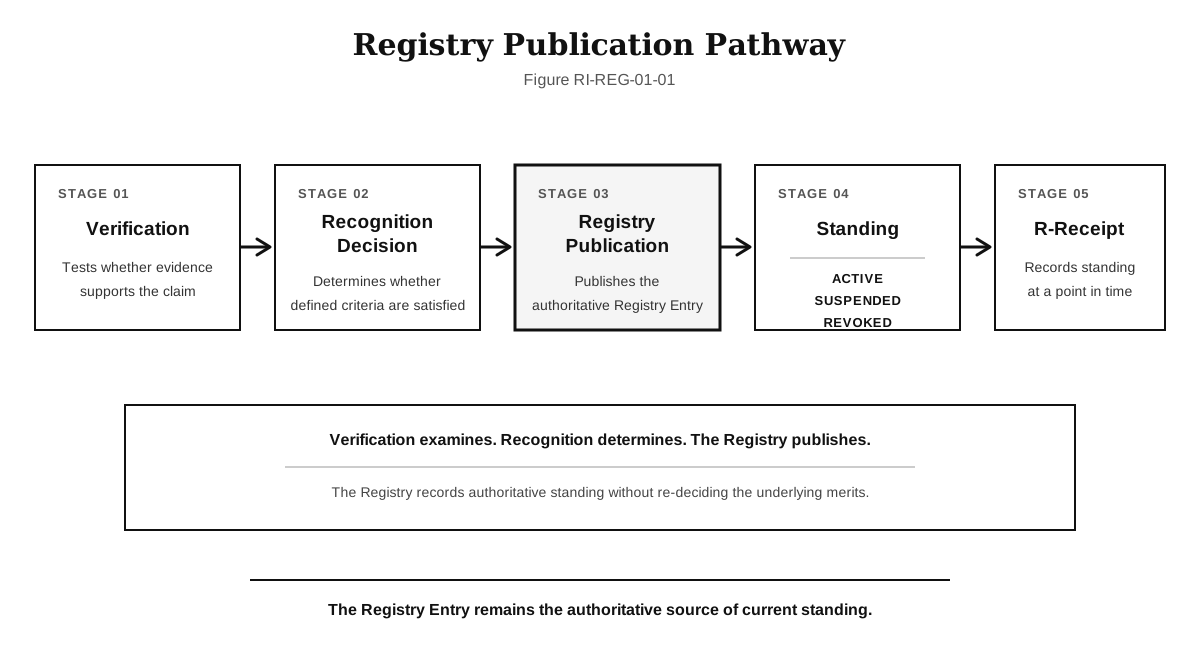
Recognition determines whether a defined claim, record, outcome, implementation, or subject satisfies specified criteria.
Registry publication records the authoritative standing arising from that Recognition Decision.
The Registry shall not convert publication administration into a second Recognition process.
7. Registry Authority
7.1 Defined Authority
A Registry shall operate under identifiable constitutional, legal, contractual, institutional, or governance authority.
The authority shall define:
- the Registry operator;
- the scope of the Registry;
- the Recognition authorities whose decisions may be published;
- the permitted Registry Entry types;
- the standing statuses;
- the publication procedure;
- the correction and challenge procedure;
- the authority to suspend or revoke standing;
- the applicable conflict-of-interest rules; and
- the continuity arrangements for the Registry record.
7.2 Constitutional Restraint
Registry authority shall be limited to the functions required to validate, publish, preserve, update, and provide access to authoritative standing.
The Registry shall not create unrecorded authority over the underlying subject, claim, implementation, evidence, verifier, or Recognition authority.
8. Registry Standing
8.1 Authoritative Standing
Registry standing is the formally published status of a recognised subject, claim, record, outcome, implementation, or other defined object.
The Registry Entry is the authoritative source of current published standing.
8.2 Standing Begins at Publication
A Recognition Decision may exist before Registry publication.
Authoritative Registry standing begins when the Registry Entry is published with its applicable effective date and status.
A private message, draft entry, internal database record, unpublished Recognition Decision, or proposed publication shall not be represented as public Registry standing.
8.3 Standing Is Time-Bounded
Standing shall be understood according to the status, effective date, limitations, conditions, expiry provisions, and later Registry events recorded at the relevant time.
A subject that previously held ACTIVE standing shall not be represented as currently ACTIVE where the Registry records suspension, revocation, expiry, or supersession.
9. Registry Entry
9.1 Definition
A Registry Entry is the authoritative published record of recognised standing.
9.2 Minimum Registry Entry Fields
A Registry Entry shall identify, where applicable:
- a unique and stable Registry Entry identifier;
- the subject or object of Recognition;
- the type of Registry Entry;
- the scope of Recognition;
- the Recognition Decision relied upon;
- the Recognition authority;
- the relevant Verification Record or Verification Report;
- the applicable criteria or standard;
- the criteria version;
- the standing status;
- the effective date and time;
- the Registry publication date and time;
- any expiry or review date;
- material qualifications, exclusions, conditions, or limitations;
- any suspension, revocation, amendment, or supersession relationship;
- the current Registry Entry version;
- the Registry publisher; and
- a stable method of retrieving the authoritative entry.
9.3 Stable Identity
A Registry Entry identifier shall remain stable throughout the life of the entry.
A status change, correction, suspension, revocation, or supersession shall not silently create the appearance that the earlier Registry Entry never existed.
10. Publication Package
A Registry publication package shall contain sufficient information to establish that publication is authorised.
The package should include:
- the final Recognition Decision;
- the identity and authority of the Recognition decision-maker;
- the subject or object recognised;
- the Recognition scope;
- the applicable criteria and version;
- the effective date;
- the required standing status;
- material qualifications, limitations, exclusions, or conditions;
- the Verification Record or a stable reference to it;
- any required conflict-of-interest or recusal record;
- the public information approved for publication;
- any protected information that shall not be publicly disclosed; and
- the authority requiring Registry publication.
The Registry may require correction of an incomplete or procedurally invalid package.
It shall not use administrative validation to reconsider the substantive merits of a valid Recognition Decision.
11. Publication Procedure
The Registry publication process should include:
- receipt of the publication package;
- assignment of a publication reference;
- confirmation of the Recognition authority;
- confirmation that the decision is final for publication purposes;
- confirmation of the subject, scope, criteria, status, and effective date;
- confirmation that required conflicts and recusals were addressed;
- confirmation that the public record does not contain prohibited information;
- creation of the Registry Entry;
- quality review of the Registry Entry against the publication package;
- publication of the authoritative entry;
- recording of the publication date and time;
- issuance or update of any applicable Receipt; and
- preservation of the publication record.
12. Ministerial Publication Rule
12.1 Meaning of Ministerial Publication
Registry publication is ministerial where the Registry confirms that the required authorised process has occurred and publishes the resulting standing without re-deciding the underlying merits.
12.2 No Discretionary Refusal
Where a valid final Recognition Decision and complete publication package satisfy the applicable Registry requirements, the Registry shall publish the entry.
The Registry shall not refuse publication merely because the Registry operator, publisher, founder, commercial participant, or another interested party disagrees with the Recognition outcome.
12.3 Procedural Defect
Where the publication package contains a material procedural defect, the Registry may return it for correction.
The Registry shall identify:
- the defect;
- the requirement not satisfied;
- the information or correction required;
- the date and time of return; and
- the effect upon publication timing.
Once the defect is cured, publication shall proceed without unnecessary delay.
13. Publication Timeliness
A Registry shall publish an authorised entry within a defined and reasonable period.
Publication delay shall not be used to suppress, manipulate, postpone, or commercially condition authoritative standing.
Where publication is delayed, the reason, authority, date, current state, and expected next action should be recorded.
14. Standing Statuses
The normative standing statuses are:
- ACTIVE — the recognised standing is currently in force;
- SUSPENDED — the recognised standing is temporarily not in force pending a defined condition, review, correction, investigation, or decision; and
- REVOKED — the recognised standing has been formally withdrawn and is no longer in force.
A Registry may record additional administrative or lifecycle information, but it shall not obscure which normative standing status applies.
14.1 ACTIVE
ACTIVE standing shall indicate the scope, effective date, limitations, expiry provisions, and applicable criteria.
14.2 SUSPENDED
SUSPENDED standing shall identify:
- the authority for suspension;
- the date and time of suspension;
- the reason or applicable ground;
- the scope of suspension;
- any condition for reinstatement;
- any review date; and
- the relationship to the earlier ACTIVE entry.
14.3 REVOKED
REVOKED standing shall identify:
- the revoking authority;
- the date and time of revocation;
- the reason or applicable ground;
- the scope and effect of revocation;
- any related challenge or appeal; and
- the relationship to the earlier Registry history.
15. Effective Date, Expiry, and Renewal
15.1 Effective Date
A Registry Entry shall identify when standing becomes effective.
The effective date may be the publication date or another date expressly authorised by the Recognition Decision.
15.2 Expiry
Where standing is time-limited, the Registry Entry shall identify the expiry date and time.
When the recognised period expires, the Registry shall record that ACTIVE standing ended at the specified time.
The historical Registry Entry shall remain retrievable.
15.3 Renewal
Renewal shall require an authorised decision confirming a new period of standing.
A new ACTIVE period shall not be inferred merely because no suspension or revocation was recorded.
16. Suspension
Standing may be suspended only through identifiable authority and an attributable decision.
Suspension may arise from:
- material new evidence;
- a challenge affecting reliability;
- loss of a required condition;
- expiry of required verification or assurance;
- a procedural defect;
- a security, safety, or integrity concern;
- an unresolved conflict of interest;
- a legal or regulatory requirement; or
- another defined ground.
The Registry shall not invent a suspension ground that was not authorised by the applicable framework.
Suspension shall not erase the earlier ACTIVE period.
17. Reinstatement
SUSPENDED standing may return to ACTIVE only through an authorised reinstatement decision.
The Registry Entry shall record:
- the reinstating authority;
- the basis for reinstatement;
- the date and time;
- any revised limitation or condition;
- any new verification relied upon; and
- the relationship to the suspension record.
18. Revocation
Standing may be revoked only through an attributable decision made under defined authority.
Revocation shall not be performed through silent deletion, unpublished instruction, commercial pressure, or informal request.
A revoked entry shall remain retrievable as part of the historical record.
A later Recognition Decision may establish new standing, but it shall not erase the earlier revocation history.
19. Amendment and Supersession
19.1 Amendment
A Registry Entry may be amended where an authorised decision changes its scope, conditions, limitations, expiry, identity information, or another material field.
A substantive amendment shall create an attributable and time-sequenced Registry event.
19.2 Supersession
A Registry Entry is superseded where a later entry or version formally replaces its current effect.
The Registry shall preserve the relationship between the earlier and later entries.
19.3 No Silent Replacement
A Registry Entry shall not be materially rewritten while continuing to appear as the same unchanged record.
20. Correction
20.1 Administrative Correction
The Registry may correct typographical, formatting, metadata, reference, or other non-substantive errors.
A correction that may affect reliance should be recorded.
20.2 Material Correction
A material correction affecting standing, scope, criteria, identity, effective date, limitation, or outcome shall require authorised supporting information.
20.3 Correction Record
A correction record should identify:
- the field corrected;
- the earlier information;
- the corrected information;
- the reason for correction;
- the correcting authority;
- the date and time; and
- the effect upon reliance.
21. Public Record and Protected Material
21.1 Public Minimum Record
The public Registry Entry shall contain sufficient information for an independent person to determine:
- what was recognised;
- who or what holds standing;
- the Recognition scope;
- the current status;
- the effective and publication dates;
- material limitations or conditions;
- the applicable criteria;
- the Recognition authority; and
- how to retrieve the authoritative record.
21.2 Protected Material
The Registry is not required to publish confidential, private, privileged, security-sensitive, commercially restricted, legally protected, or otherwise prohibited supporting material.
Where supporting material is restricted, the Registry should record the existence and basis of the restriction where lawful and appropriate.
21.3 Redaction
A public record may be redacted where necessary.
Redaction shall not materially misrepresent the scope, status, limitation, authority, or meaning of the Registry Entry.
22. Registry Integrity
A Registry shall preserve the integrity of its entries and event history.
Controls should protect against:
- unauthorised creation or alteration;
- silent deletion;
- status manipulation;
- identifier collision;
- publication without authority;
- loss of historical records;
- misrepresentation of effective dates;
- broken links between decisions and entries;
- unauthorised access to protected information; and
- loss of availability.
Controls may include attributable access, version history, change records, cryptographic hashes, signatures, independent backups, audit records, integrity monitoring, or other proportionate safeguards.
23. Conflicts of Interest and Recusal
23.1 Conflict Disclosure
A person participating in Registry validation or publication shall disclose any material interest that may reasonably affect impartial administration.
23.2 Registry Recusal
Where the Registry operator, publisher, founder, employee, contractor, owner, licensee, or related party has a material interest in the subject of an entry, the affected person shall not exercise discretionary control over the publication outcome.
Where recusal is required, the record should identify:
- the person recused;
- the nature of the conflict;
- the date of recusal;
- the replacement authority; and
- the scope of the recusal.
23.3 No Founder Override
A founder, owner, sponsor, commercial participant, or intellectual-property steward shall not possess an unrecorded power to block, change, delay, suspend, revoke, or suppress a valid Registry publication.
24. Challenge and Review
24.1 Registry Challenge
A Registry Entry may be challenged on grounds including:
- incorrect identity;
- incorrect scope;
- incorrect status;
- incorrect effective date;
- publication without authority;
- failure to publish an authorised decision;
- failure to record a suspension or revocation;
- material omission;
- procedural defect;
- conflict of interest;
- unauthorised alteration; or
- another matter affecting reliance upon the Registry record.
24.2 Challenge Boundary
A challenge to Registry administration shall be distinguished from a challenge to the underlying Verification Record or Recognition Decision.
The Registry shall direct substantive challenges to the authority empowered to reconsider the underlying decision.
24.3 Challenge Record
A material challenge and its outcome should be recorded without silently deleting the original Registry history.
25. Appeals
Where an appeal process exists, the Registry shall record the status and effect of the appeal where it affects standing.
An appeal shall not automatically alter standing unless the applicable framework provides for suspension, stay, amendment, or another defined effect.
The outcome of the appeal shall be published when an authorised decision requires a Registry change.
26. Receipt
26.1 Function
An Receipt is a retrievable statement of a Registry Entry's recognised status at a defined point in time.
26.2 Relationship to the Registry Entry
The Receipt is derived from the Registry Entry.
It does not replace the Registry Entry, Recognition Decision, Verification Record, Responsibility Record, or underlying evidence.
The Registry Entry remains the authoritative source of current standing.
26.3 Minimum Receipt Information
An Receipt should identify:
- the Receipt identifier;
- the related Registry Entry;
- the subject or object;
- the standing status at issuance;
- the scope of standing;
- the issue date and time;
- the effective date;
- any expiry or review date;
- material limitations or conditions;
- the Registry publisher; and
- a means of retrieving the current Registry Entry.
26.4 Status Change
A later suspension, revocation, expiry, amendment, or supersession shall not alter the historical fact that an earlier Receipt was issued.
The Receipt shall not be relied upon as proof of current standing without checking the authoritative Registry Entry.
27. Interoperability and Portability
A Registry should support reliable exchange and retrieval of Registry information across organisational and technical boundaries.
Interoperable Registry information should preserve:
- stable identifiers;
- defined fields;
- standing status;
- effective and publication times;
- scope and limitations;
- decision references;
- version and supersession relationships;
- public retrieval locations; and
- integrity information where applicable.
Interoperability shall not require public disclosure of protected evidence or confidential supporting records.
28. Availability and Continuity
A Registry shall maintain reasonable availability proportionate to the reliance placed upon it.
Continuity arrangements should address:
- backup and recovery;
- loss of the Registry operator;
- transfer of custodianship;
- technical failure;
- cybersecurity incidents;
- domain or hosting loss;
- legal or organisational dissolution;
- preservation of identifiers and retrieval paths; and
- continued access to historical records.
A change of operator or technology shall not silently destroy the authoritative record.
29. Registry Audit and Reconstruction
The Registry shall preserve sufficient information to reconstruct:
- when an entry was received;
- who validated the publication package;
- what decision authorised publication;
- when the entry was published;
- what status applied at each material time;
- what corrections or amendments occurred;
- what suspension, reinstatement, revocation, expiry, or supersession occurred;
- who authorised each material change;
- what challenge or appeal affected the entry; and
- what Receipts were issued.
30. Conformance Requirements
A Registry conforms with this framework only where it can demonstrate:
- defined constitutional or institutional authority;
- separation between Verification, Recognition, Registry publication, and accountability judgment;
- a stable and attributable Registry Entry structure;
- publication based upon an authorised Recognition Decision;
- ministerial publication without discretionary re-judgment of the merits;
- clear ACTIVE, SUSPENDED, and REVOKED standing;
- recorded effective dates, limitations, expiry provisions, and status changes;
- preservation of historical Registry events;
- no silent deletion or material replacement;
- public access to the minimum authoritative record;
- protection of restricted supporting information;
- conflict-of-interest and recusal controls;
- challenge and correction procedures;
- stable retrieval and continuity arrangements;
- support for Receipt validation; and
- complete reconstruction of Registry history.
A searchable list, customer directory, certification badge, membership database, internal spreadsheet, or public profile does not by itself constitute a conforming Responsibility Infrastructure Registry.
31. Relationship to Other Publications
This framework should be read alongside:
- RI-001 — Definition of the Responsibility Infrastructure Category.
- RI-002 — Principles of Provable Responsibility.
- RI-003 — Core Elements of Responsibility Infrastructure.
- RI-004 — The Responsibility Record Specification.
- RI-005 — Characteristics of Responsibility Infrastructure.
- RI-GLOSS-01 — Responsibility Infrastructure Glossary.
- RI-GOV-01 — Responsibility Infrastructure Governance Charter.
- RI-STD-01 — The Responsibility Chain.
- RI-STD-02 — Responsibility Evidence Requirements.
- RI-STD-03 — Responsibility Verification Requirements.
32. Normative Statement
The Registry Entry is the authoritative source of published standing.
Once a valid final Recognition Decision and complete publication package satisfy the applicable requirements, Registry publication shall proceed without discretionary re-judgment of the underlying merits.
Standing changes shall be attributable, time-sequenced, publicly retrievable, and preserved without silent deletion.
33. Keywords
Responsibility Infrastructure, Responsibility Infrastructure Registry, Registry Framework, Registry Entry, Registry Standing, Recognition Decision, Ministerial Publication, ACTIVE, SUSPENDED, REVOKED, Receipt, Publication Authority, Registry Integrity, Registry History, Conflict of Interest, Recusal, Suspension, Revocation, Supersession, Interoperability
- 2026-06-12Consultation Draft · Version 1.0 first issued for consultation